


Cinéma russe et soviétique
Adam épouse Ève
▪ ▪ ▪ ▪ ▪ ▪ ▪
Адам женится на Еве
Adam marries Eve
Adam zhenitsya na Eve
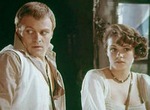
Réalisation : Viktor TITOV (Виктор ТИТОВ)
Scénario : Viktor TITOV (Виктор ТИТОВ)
D'après la pièce de R. Strahl.
Interprétation
Aleksandr SOLOVIOV (Александр СОЛОВЬЕВ) ...Adam
Elena TSYPLAKOVA (Елена ЦЫПЛАКОВА) ...Eve
Zinovi GUERDT (Зиновий ГЕРДТ) ...Juge
Tatiana VASSILIEVA (Татьяна ВАСИЛЬЕВА) ...Procureure
Images : Gueorgui RERBERG (Георгий РЕРБЕРГ)
Chant : Mikael TARIVERDIEV (Микаэл ТАРИВЕРДИЕВ)
Décors : Piotr PROROKOV (Пётр ПРОРОКОВ)
Musique : Mikael TARIVERDIEV (Микаэл ТАРИВЕРДИЕВ)
Musique de chanson : Mikael TARIVERDIEV (Микаэл ТАРИВЕРДИЕВ)
Sites : IMDb, Kino-teatr
Synopsis
L'action se déroule lors d'une audience d'un tribunal fictif, au cours de laquelle il s'agit de déterminer si Adam et Ève peuvent se marier...
Sélections dans les festivals ou événements :
- Cinéma soviétique et chansons, (kinoglaz.fr), 2026
Images, vidéos, textes
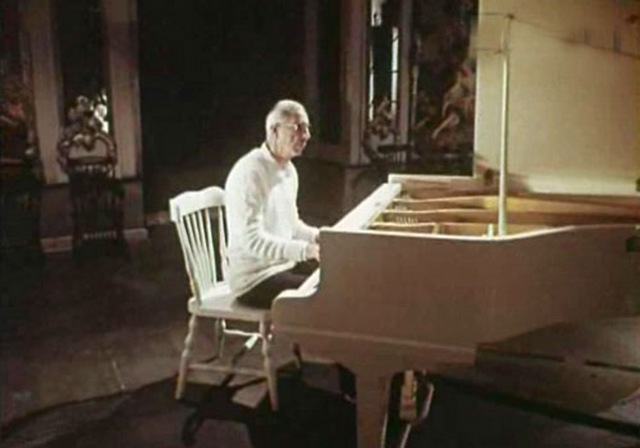
Huit sonnets de William Shakespeare, mis en musique et interprétés
par Mikael Tariverdiev dans le film et dans la vidéo ci-dessous.
Les textes russes sont les traductions des sonnets de Shakespeare réalisées par Samouil Marchak.
Les textes français sont des traductions des versions russes de Samouil Marchak.
Les textes anglais sont les sonnets originaux de William Shakespeare.
Eight sonnets by William Shakespeare, set to music and performed by Mikael Tariverdiev in the film and in the video below.
The Russian texts are Samuil Marshak's translations of Shakespeare's sonnets.
The French texts are translations of Samuil Marshak's Russian versions.
The English texts are William Shakespeare's original sonnets.
Восемь сонетов Уильяма Шекспира, положенных на музыку и исполненных
Микаэлом Таривердиевым в фильме и в представленном ниже видео.
Русские тексты — переводы сонетов Шекспира, выполненные Самуилом Маршаком.
Французские тексты — переводы русских версий Самуила Маршака.
Английские тексты — оригинальные сонеты Уильяма Шекспира.
1- 00:00 Люблю
Люблю, но реже говорю об этом,
Люблю нежней, но не для многих глаз.
Торгует чувством тот, кто перед светом
Всю душу выставляет напоказ.
Тебя встречал я песней, как приветом,
Когда любовь нова была для нас.
Так соловей гремит в полночный час
Весной, но флейту забывает летом.
Ночь не лишится прелести своей,
Когда его умолкнут излиянья.
Но музыка, звуча со всех ветвей,
Обычной став, теряет обаянье.
И я умолк, подобно соловью:
Своё пропел и больше не пою.
Je t'aime
Je t'aime, mais je le dis moins souvent,
Je t'aime plus tendrement, mais loin des regards.
Il fait commerce de ses sentiments, celui qui, devant le monde,
Expose son âme tout entière aux yeux de tous.
Je t'accueillais autrefois par une chanson, comme par un salut,
Quand notre amour était encore nouveau.
Ainsi le rossignol fait retentir son chant au milieu de la nuit
Au printemps, mais oublie sa flûte en été.
La nuit ne perd rien de son charme
Lorsque ses effusions se taisent.
Mais la musique qui résonne de toutes les branches,
Devenue familière, perd son enchantement.
Et moi, je me suis tu, comme le rossignol :
J'ai chanté ce que j'avais à chanter, et je ne chante plus.
Sonnet 102
My love is strengthened, though more weak in seeming;
I love not less, though less the show appear;
That love is merchandized whose rich esteeming
The owner's tongue doth publish every where.
Our love was new, and then but in the spring,
When I was wont to greet it with my lays;
As Philomel in summer's front doth sing,
And stops her pipe in growth of riper days:
Not that the summer is less pleasant now
Than when her mournful hymns did hush the night,
But that wild music burthens every bough,
And sweets grown common lose their dear delight.
Therefore like her I sometime hold my tongue,
Because I would not dull you with my song.
******************************
2- 02:30 Мешать соединенью двух сердец
Мешать соединенью двух сердец
Я не намерен. Может ли измена
Любви безмерной положить конец?
Любовь не знает убыли и тлена.
Любовь — над бурей поднятый маяк,
Не меркнущий во мраке и тумане.
Любовь — звезда, которою моряк
Определяет место в океане.
Любовь — не кукла жалкая в руках
У времени, стирающего розы
На пламенных устах и на щеках,
И не страшны ей времени угрозы.
А если я не прав и лжёт мой стих,
То нет любви — и нет стихов моих!
Ne point entraver l'union de deux cœurs
Je n'ai nullement l'intention d'empêcher
L'union de deux cœurs. L'infidélité pourrait-elle
Mettre fin à un amour sans limites ?
L'amour ne connaît ni déclin ni destruction.
L'amour est un phare dressé au-dessus de la tempête,
Qui ne s'éteint ni dans l'obscurité ni dans le brouillard.
L'amour est l'étoile grâce à laquelle le marin
Détermine sa position sur l'océan.
L'amour n'est pas une pauvre marionnette entre les mains
Du temps, qui efface les roses
Sur les lèvres ardentes et sur les joues ;
Les menaces du temps ne lui font pas peur.
Et si je me trompe, si mes vers sont mensongers,
Alors l'amour n'existe pas — et mes vers non plus !
Sonnet 116
Let me not to the marriage of true minds
Admit impediments. Love is not love
Which alters when it alteration finds,
Or bends with the remover to remove.
O no! it is an ever-fixed mark
That looks on tempests and is never shaken;
It is the star to every wand'ring bark,
Whose worth's unknown, although his height be taken.
Love's not Time's fool, though rosy lips and cheeks
Within his bending sickle's compass come;
Love alters not with his brief hours and weeks,
But bears it out even to the edge of doom.
If this be error and upon me proved,
I never writ, nor no man ever loved.
******************************
3- 04:13 Любовь слепа
Любовь слепа и нас лишает глаз.
Не видим мы того, что видно ясно.
Я видел красоту, но каждый раз
Понять не мог, что дурно, что прекрасно.
И если взгляды сердце завели
И якорь бросили в такие воды,
Где многие проходят корабли,
Зачем ему ты не даёшь свободы?
Как сердцу моему проезжий двор
Казаться мог усадьбою счастливой?
Но всё, что видел, отрицал мой взор,
Подкрашивая правдой облик лживый...
Правдивый свет мне заслонила тьма,
И ложь меня объяла, как чума.
Повторение первых четырёх строк:
Любовь слепа и нас лишает глаз.
Не видим мы того, что видно ясно.
Я видел красоту, но каждый раз
Понять не мог, что дурно, что прекрасно.
L'amour est aveugle
L'amour est aveugle et nous prive de nos yeux.
Nous ne voyons pas ce qui est pourtant évident.
J'ai contemplé la beauté, mais chaque fois
Je ne savais distinguer le laid du beau.
Et si mes regards ont entraîné mon cœur
Et jeté l'ancre dans ces eaux
Où passent tant de navires,
Pourquoi ne lui rends-tu pas sa liberté ?
Comment mon cœur a-t-il pu prendre une auberge de passage
Pour une demeure où règne le bonheur ?
Mais mon regard niait tout ce qu'il voyait,
Parant de vérité un visage mensonger...
Les ténèbres m'ont caché la lumière de la vérité,
Et le mensonge m'a enveloppé comme une peste.
Reprise :
L'amour est aveugle et nous prive de nos yeux.
Nous ne voyons pas ce qui est pourtant évident.
J'ai contemplé la beauté, mais chaque fois
Je ne savais distinguer le laid du beau.
Sonnet 137
Thou blind fool, Love, what dost thou to mine eyes
That they behold and see not what they see?
They know what beauty is, see where it lies,
Yet what the best is take the worst to be.
If eyes, corrupt by overpartial looks,
Be anchored in the bay where all men ride,
Why of eyes’ falsehood hast thou forgèd hooks,
Whereto the judgment of my heart is tied?
Why should my heart think that a several plot
Which my heart knows the wide world’s common place?
Or mine eyes, seeing this, say this is not,
To put fair truth upon so foul a face?
In things right true my heart and eyes have erred,
And to this false plague are they now transferred.
******************************
4- 08:34 Пылающую голову рассвет
Пылающую голову рассвет
Приподнимает с ложа своего,
И всё земное шлёт ему привет,
Лучистое встречая божество.
Когда в расцвете сил, в полдневный час,
Светило смотрит с вышины крутой,
С каким восторгом миллионы глаз
Следят за колесницей золотой.
Когда же солнце завершает круг
И катится устало на закат,
Глаза его поклонников и слуг
Уже в другую сторону глядят.
Оставь же сына, юность хороня.
Он встретит солнце завтрашнего дня!
La tête flamboyante de l'aurore
L'aurore soulève de sa couche
Sa tête flamboyante,
Et toute la terre lui adresse son salut,
Accueillant cette divinité rayonnante.
Quand, dans la plénitude de ses forces, à l'heure de midi,
L'astre contemple le monde du haut du ciel,
Avec quel émerveillement des millions de regards
Suivent son char d'or !
Mais lorsque le soleil achève sa course
Et roule, fatigué, vers le couchant,
Les yeux de ses admirateurs et de ses serviteurs
Se tournent déjà dans une autre direction.
Laisse donc un fils derrière toi, lorsque tu enseveliras ta jeunesse.
Il accueillera le soleil du lendemain !
Sonnet 7
Lo, in the orient when the gracious light
Lifts up his burning head, each under eye
Doth homage to his new-appearing sight,
Serving with looks his sacred majesty;
And having climbed the steep-up heavenly hill,
Resembling strong youth in his middle age,
Yet mortal looks adore his beauty still,
Attending on his golden pilgrimage.
But when from highmost pitch with weary car
Like feeble age he reeleth from the day,
The eyes, ’fore duteous, now converted are
From his low tract and look another way.
So thou, thyself outgoing in thy noon,
Unlooked on diest unless thou get a son.
******************************
5- 10:56 Увы, мой стих
Увы, мой стих не блещет новизной,
Разнообразьем перемен нежданных.
Не поискать ли мне тропы иной,
Приёмов новых, сочетаний странных?
Я повторяю прежнее опять,
В одежде старой появляюсь снова.
И кажется, по имени назвать
Меня в стихах любое может слово.
Всё это оттого, что вновь и вновь
Решаю я одну свою задачу:
Я о тебе пишу, моя любовь,
И то же сердце, те же силы трачу.
Всё то же солнце ходит надо мной,
Но и оно не блещет новизной.
Hélas, mes vers
Hélas, mes vers ne brillent guère par leur nouveauté,
Ni par la diversité de changements inattendus.
Ne devrais-je pas chercher une autre voie,
Des procédés nouveaux, d'étranges associations ?
Je répète encore et toujours les mêmes choses,
Je reparais vêtu de mes anciens habits.
Et il semble que chaque mot de mes vers
Pourrait me désigner par mon nom.
Tout cela parce que, sans cesse,
Je m'efforce de résoudre un seul et même problème :
C'est de toi que j'écris, mon amour,
Y consacrant le même cœur, les mêmes forces.
C'est toujours le même soleil qui poursuit sa course au-dessus de moi,
Mais lui non plus ne brille pas par sa nouveauté.
Sonnet 76
Why is my verse so barren of new pride,
So far from variation or quick change?
Why with the time do I not glance aside
To new-found methods and to compounds strange?
Why write I still all one, ever the same,
And keep invention in a noted weed,
That every word doth almost tell my name,
Showing their birth and where they did proceed?
O, know, sweet love, I always write of you,
And you and love are still my argument;
So all my best is dressing old words new,
Spending again what is already spent.
For as the sun is daily new and old,
So is my love, still telling what is told.
******************************
6- 12:56 Сонет о курице
Нередко для того, чтобы поймать
Шальную курицу иль петуха,
Ребёнка наземь опускает мать,
К его мольбам и жалобам глуха.
И тщетно гонится за беглецом,
Который, шею вытянув вперёд
И трепеща перед её лицом,
Передохнуть хозяйке не даёт.
Так ты меня оставила, мой друг,
Гонясь за тем, что убегает прочь.
Я, как дитя, ищу тебя вокруг,
Зову тебя, терзаясь день и ночь.
Скорей мечту крылатую лови
И возвратись к покинутой любви.
Le Sonnet de la poule
Souvent, pour attraper
Une poule écervelée ou un coq,
Une mère pose son enfant à terre,
Sourde à ses supplications et à ses plaintes.
Et elle poursuit en vain le fugitif,
Qui, le cou tendu en avant,
Battant des ailes devant son visage,
Ne laisse aucun répit à sa maîtresse.
Ainsi m'as-tu abandonné, mon amour,
Pour poursuivre ce qui s'enfuit au loin.
Comme un enfant, je te cherche partout,
Je t'appelle, tourmenté jour et nuit.
Attrape vite ce rêve ailé,
Et reviens vers l'amour que tu as délaissé.
Sonnet 143
Lo, as a careful huswife runs to catch
One of her feathered creatures broke away,
Sets down her babe, and makes all swift dispatch
In pursuit of the thing she would have stay,
Whilst her neglected child holds her in chase,
Cries to catch her whose busy care is bent
To follow that which flies before her face,
Not prizing her poor infant’s discontent;
So runn’st thou after that which flies from thee,
Whilst I, thy babe, chase thee afar behind.
But if thou catch thy hope, turn back to me
And play the mother’s part: kiss me, be kind.
So will I pray that thou mayst have thy will,
If thou turn back and my loud crying still.
******************************
7- 14:28 Сонет о яблоке
Что ж, буду жить, приемля как условье,
Что ты верна. Хоть стала ты иной,
Но тень любви нам кажется любовью.
Не сердцем — так глазами будь со мной.
Твой взор не говорит о перемене.
Он не таит ни скуки, ни вражды.
Есть лица, на которых преступленья
Чертят неизгладимые следы.
Но, видно, так угодно высшим силам:
Пусть лгут твои прекрасные уста,
Но в этом взоре, ласковом и милом,
По-прежнему сияет чистота.
Прекрасно было яблоко, что с древа
Адаму на беду сорвала Ева.
Le Sonnet de la pomme
Eh bien, je vivrai en tenant pour acquis
Que tu m'es fidèle. Bien que tu aies changé,
L'ombre de l'amour nous semble encore être l'amour.
Si ce n'est par le cœur, reste avec moi au moins par le regard.
Ton regard ne révèle aucun changement.
Il ne laisse paraître ni ennui ni hostilité.
Il est des visages sur lesquels les fautes
Tracent des marques ineffaçables.
Mais il semble que les puissances célestes l'aient voulu ainsi :
Que tes belles lèvres mentent,
Mais dans ce regard tendre et doux
Brille toujours la pureté.
Elle était belle, la pomme que, de l'arbre,
Ève cueillit pour le malheur d'Adam.
Sonnet 93
So shall I live, supposing thou art true,
Like a deceived husband; so love’s face
May still seem love to me, though altered new;
Thy looks with me, thy heart in other place.
For there can live no hatred in thine eye;
Therefore in that I cannot know thy change.
In many’s looks, the false heart’s history
Is writ in moods and frowns and wrinkles strange.
But heaven in thy creation did decree
That in thy face sweet love should ever dwell;
Whate’er thy thoughts or thy heart’s workings be,
Thy looks should nothing thence but sweetness tell.
How like Eve’s apple doth thy beauty grow,
If thy sweet virtue answer not thy show.
******************************
8- 16:21 Я виноват
Скажи, что я уплатой пренебрёг
За всё добро, каким тебе обязан,
Что я забыл заветный твой порог,
С которым всеми узами я связан,
Что я не знал цены твоим часам,
Безжалостно чужим их отдавая,
Что позволял безвестным парусам
Себя нести от милого мне края.
Все преступленья вольности моей
Ты положи с моей любовью рядом,
Представь на строгий суд твоих очей,
Но не казни меня смертельным взглядом.
Я виноват. Но вся моя вина
Покажет, как любовь твоя верна.
Je suis coupable
Dis que j'ai négligé de te rendre
Tout le bien que je te dois,
Que j'ai oublié le seuil de ta demeure chérie,
À laquelle tant de liens m'attachent ;
Que je n'ai pas su apprécier les heures que tu m'accordais,
Les consacrant sans pitié à d'autres,
Que j'ai laissé des voiles inconnues
M'emporter loin des rivages qui me sont chers.
Tous les torts que j'ai commis en usant de ma liberté,
Mets-les en regard de mon amour,
Soumets-les au jugement sévère de tes yeux,
Mais ne me condamne pas d'un regard mortel.
Je suis coupable. Mais toutes mes fautes
Montreront combien ton amour est fidèle.
Sonnet 117
Accuse me thus: that I have scanted all
Wherein I should your great deserts repay,
Forgot upon your dearest love to call,
Whereto all bonds do tie me day by day;
That I have frequent been with unknown minds,
And given to time your own dear-purchased right;
That I have hoisted sail to all the winds
Which should transport me farthest from your sight.
Book both my willfulness and errors down,
And on just proof surmise accumulate;
Bring me within the level of your frown,
But shoot not at me in your wakened hate,
Since my appeal says I did strive to prove
The constancy and virtue of your love.
Les textes russes sont les traductions des sonnets de Shakespeare réalisées par Samouil Marchak.
Les textes français sont des traductions des versions russes de Samouil Marchak.
Les textes anglais sont les sonnets originaux de William Shakespeare.
Eight sonnets by William Shakespeare, set to music and performed by Mikael Tariverdiev in the film and in the video below.
The Russian texts are Samuil Marshak's translations of Shakespeare's sonnets.
The French texts are translations of Samuil Marshak's Russian versions.
The English texts are William Shakespeare's original sonnets.
Восемь сонетов Уильяма Шекспира, положенных на музыку и исполненных Микаэлом Таривердиевым в фильме и в представленном ниже видео.
Русские тексты — переводы сонетов Шекспира, выполненные Самуилом Маршаком.
Французские тексты — переводы русских версий Самуила Маршака.
Английские тексты — оригинальные сонеты Уильяма Шекспира.
Люблю, но реже говорю об этом,
Люблю нежней, но не для многих глаз.
Торгует чувством тот, кто перед светом
Всю душу выставляет напоказ.
Тебя встречал я песней, как приветом,
Когда любовь нова была для нас.
Так соловей гремит в полночный час
Весной, но флейту забывает летом.
Ночь не лишится прелести своей,
Когда его умолкнут излиянья.
Но музыка, звуча со всех ветвей,
Обычной став, теряет обаянье.
И я умолк, подобно соловью:
Своё пропел и больше не пою.
Je t'aime
Je t'aime, mais je le dis moins souvent,
Je t'aime plus tendrement, mais loin des regards.
Il fait commerce de ses sentiments, celui qui, devant le monde,
Expose son âme tout entière aux yeux de tous.
Je t'accueillais autrefois par une chanson, comme par un salut,
Quand notre amour était encore nouveau.
Ainsi le rossignol fait retentir son chant au milieu de la nuit
Au printemps, mais oublie sa flûte en été.
La nuit ne perd rien de son charme
Lorsque ses effusions se taisent.
Mais la musique qui résonne de toutes les branches,
Devenue familière, perd son enchantement.
Et moi, je me suis tu, comme le rossignol :
J'ai chanté ce que j'avais à chanter, et je ne chante plus.
Sonnet 102
My love is strengthened, though more weak in seeming;
I love not less, though less the show appear;
That love is merchandized whose rich esteeming
The owner's tongue doth publish every where.
Our love was new, and then but in the spring,
When I was wont to greet it with my lays;
As Philomel in summer's front doth sing,
And stops her pipe in growth of riper days:
Not that the summer is less pleasant now
Than when her mournful hymns did hush the night,
But that wild music burthens every bough,
And sweets grown common lose their dear delight.
Therefore like her I sometime hold my tongue,
Because I would not dull you with my song.
******************************
2- 02:30 Мешать соединенью двух сердец
Мешать соединенью двух сердец
Я не намерен. Может ли измена
Любви безмерной положить конец?
Любовь не знает убыли и тлена.
Любовь — над бурей поднятый маяк,
Не меркнущий во мраке и тумане.
Любовь — звезда, которою моряк
Определяет место в океане.
Любовь — не кукла жалкая в руках
У времени, стирающего розы
На пламенных устах и на щеках,
И не страшны ей времени угрозы.
А если я не прав и лжёт мой стих,
То нет любви — и нет стихов моих!
Ne point entraver l'union de deux cœurs
Je n'ai nullement l'intention d'empêcher
L'union de deux cœurs. L'infidélité pourrait-elle
Mettre fin à un amour sans limites ?
L'amour ne connaît ni déclin ni destruction.
L'amour est un phare dressé au-dessus de la tempête,
Qui ne s'éteint ni dans l'obscurité ni dans le brouillard.
L'amour est l'étoile grâce à laquelle le marin
Détermine sa position sur l'océan.
L'amour n'est pas une pauvre marionnette entre les mains
Du temps, qui efface les roses
Sur les lèvres ardentes et sur les joues ;
Les menaces du temps ne lui font pas peur.
Et si je me trompe, si mes vers sont mensongers,
Alors l'amour n'existe pas — et mes vers non plus !
Sonnet 116
Let me not to the marriage of true minds
Admit impediments. Love is not love
Which alters when it alteration finds,
Or bends with the remover to remove.
O no! it is an ever-fixed mark
That looks on tempests and is never shaken;
It is the star to every wand'ring bark,
Whose worth's unknown, although his height be taken.
Love's not Time's fool, though rosy lips and cheeks
Within his bending sickle's compass come;
Love alters not with his brief hours and weeks,
But bears it out even to the edge of doom.
If this be error and upon me proved,
I never writ, nor no man ever loved.
******************************
3- 04:13 Любовь слепа
Любовь слепа и нас лишает глаз.
Не видим мы того, что видно ясно.
Я видел красоту, но каждый раз
Понять не мог, что дурно, что прекрасно.
И если взгляды сердце завели
И якорь бросили в такие воды,
Где многие проходят корабли,
Зачем ему ты не даёшь свободы?
Как сердцу моему проезжий двор
Казаться мог усадьбою счастливой?
Но всё, что видел, отрицал мой взор,
Подкрашивая правдой облик лживый...
Правдивый свет мне заслонила тьма,
И ложь меня объяла, как чума.
Повторение первых четырёх строк:
Любовь слепа и нас лишает глаз.
Не видим мы того, что видно ясно.
Я видел красоту, но каждый раз
Понять не мог, что дурно, что прекрасно.
L'amour est aveugle
L'amour est aveugle et nous prive de nos yeux.
Nous ne voyons pas ce qui est pourtant évident.
J'ai contemplé la beauté, mais chaque fois
Je ne savais distinguer le laid du beau.
Et si mes regards ont entraîné mon cœur
Et jeté l'ancre dans ces eaux
Où passent tant de navires,
Pourquoi ne lui rends-tu pas sa liberté ?
Comment mon cœur a-t-il pu prendre une auberge de passage
Pour une demeure où règne le bonheur ?
Mais mon regard niait tout ce qu'il voyait,
Parant de vérité un visage mensonger...
Les ténèbres m'ont caché la lumière de la vérité,
Et le mensonge m'a enveloppé comme une peste.
Reprise :
L'amour est aveugle et nous prive de nos yeux.
Nous ne voyons pas ce qui est pourtant évident.
J'ai contemplé la beauté, mais chaque fois
Je ne savais distinguer le laid du beau.
Sonnet 137
Thou blind fool, Love, what dost thou to mine eyes
That they behold and see not what they see?
They know what beauty is, see where it lies,
Yet what the best is take the worst to be.
If eyes, corrupt by overpartial looks,
Be anchored in the bay where all men ride,
Why of eyes’ falsehood hast thou forgèd hooks,
Whereto the judgment of my heart is tied?
Why should my heart think that a several plot
Which my heart knows the wide world’s common place?
Or mine eyes, seeing this, say this is not,
To put fair truth upon so foul a face?
In things right true my heart and eyes have erred,
And to this false plague are they now transferred.
******************************
4- 08:34 Пылающую голову рассвет
Пылающую голову рассвет
Приподнимает с ложа своего,
И всё земное шлёт ему привет,
Лучистое встречая божество.
Когда в расцвете сил, в полдневный час,
Светило смотрит с вышины крутой,
С каким восторгом миллионы глаз
Следят за колесницей золотой.
Когда же солнце завершает круг
И катится устало на закат,
Глаза его поклонников и слуг
Уже в другую сторону глядят.
Оставь же сына, юность хороня.
Он встретит солнце завтрашнего дня!
La tête flamboyante de l'aurore
L'aurore soulève de sa couche
Sa tête flamboyante,
Et toute la terre lui adresse son salut,
Accueillant cette divinité rayonnante.
Quand, dans la plénitude de ses forces, à l'heure de midi,
L'astre contemple le monde du haut du ciel,
Avec quel émerveillement des millions de regards
Suivent son char d'or !
Mais lorsque le soleil achève sa course
Et roule, fatigué, vers le couchant,
Les yeux de ses admirateurs et de ses serviteurs
Se tournent déjà dans une autre direction.
Laisse donc un fils derrière toi, lorsque tu enseveliras ta jeunesse.
Il accueillera le soleil du lendemain !
Sonnet 7
Lo, in the orient when the gracious light
Lifts up his burning head, each under eye
Doth homage to his new-appearing sight,
Serving with looks his sacred majesty;
And having climbed the steep-up heavenly hill,
Resembling strong youth in his middle age,
Yet mortal looks adore his beauty still,
Attending on his golden pilgrimage.
But when from highmost pitch with weary car
Like feeble age he reeleth from the day,
The eyes, ’fore duteous, now converted are
From his low tract and look another way.
So thou, thyself outgoing in thy noon,
Unlooked on diest unless thou get a son.
******************************
5- 10:56 Увы, мой стих
Увы, мой стих не блещет новизной,
Разнообразьем перемен нежданных.
Не поискать ли мне тропы иной,
Приёмов новых, сочетаний странных?
Я повторяю прежнее опять,
В одежде старой появляюсь снова.
И кажется, по имени назвать
Меня в стихах любое может слово.
Всё это оттого, что вновь и вновь
Решаю я одну свою задачу:
Я о тебе пишу, моя любовь,
И то же сердце, те же силы трачу.
Всё то же солнце ходит надо мной,
Но и оно не блещет новизной.
Hélas, mes vers
Hélas, mes vers ne brillent guère par leur nouveauté,
Ni par la diversité de changements inattendus.
Ne devrais-je pas chercher une autre voie,
Des procédés nouveaux, d'étranges associations ?
Je répète encore et toujours les mêmes choses,
Je reparais vêtu de mes anciens habits.
Et il semble que chaque mot de mes vers
Pourrait me désigner par mon nom.
Tout cela parce que, sans cesse,
Je m'efforce de résoudre un seul et même problème :
C'est de toi que j'écris, mon amour,
Y consacrant le même cœur, les mêmes forces.
C'est toujours le même soleil qui poursuit sa course au-dessus de moi,
Mais lui non plus ne brille pas par sa nouveauté.
Sonnet 76
Why is my verse so barren of new pride,
So far from variation or quick change?
Why with the time do I not glance aside
To new-found methods and to compounds strange?
Why write I still all one, ever the same,
And keep invention in a noted weed,
That every word doth almost tell my name,
Showing their birth and where they did proceed?
O, know, sweet love, I always write of you,
And you and love are still my argument;
So all my best is dressing old words new,
Spending again what is already spent.
For as the sun is daily new and old,
So is my love, still telling what is told.
******************************
6- 12:56 Сонет о курице
Нередко для того, чтобы поймать
Шальную курицу иль петуха,
Ребёнка наземь опускает мать,
К его мольбам и жалобам глуха.
И тщетно гонится за беглецом,
Который, шею вытянув вперёд
И трепеща перед её лицом,
Передохнуть хозяйке не даёт.
Так ты меня оставила, мой друг,
Гонясь за тем, что убегает прочь.
Я, как дитя, ищу тебя вокруг,
Зову тебя, терзаясь день и ночь.
Скорей мечту крылатую лови
И возвратись к покинутой любви.
Le Sonnet de la poule
Souvent, pour attraper
Une poule écervelée ou un coq,
Une mère pose son enfant à terre,
Sourde à ses supplications et à ses plaintes.
Et elle poursuit en vain le fugitif,
Qui, le cou tendu en avant,
Battant des ailes devant son visage,
Ne laisse aucun répit à sa maîtresse.
Ainsi m'as-tu abandonné, mon amour,
Pour poursuivre ce qui s'enfuit au loin.
Comme un enfant, je te cherche partout,
Je t'appelle, tourmenté jour et nuit.
Attrape vite ce rêve ailé,
Et reviens vers l'amour que tu as délaissé.
Sonnet 143
Lo, as a careful huswife runs to catch
One of her feathered creatures broke away,
Sets down her babe, and makes all swift dispatch
In pursuit of the thing she would have stay,
Whilst her neglected child holds her in chase,
Cries to catch her whose busy care is bent
To follow that which flies before her face,
Not prizing her poor infant’s discontent;
So runn’st thou after that which flies from thee,
Whilst I, thy babe, chase thee afar behind.
But if thou catch thy hope, turn back to me
And play the mother’s part: kiss me, be kind.
So will I pray that thou mayst have thy will,
If thou turn back and my loud crying still.
******************************
7- 14:28 Сонет о яблоке
Что ж, буду жить, приемля как условье,
Что ты верна. Хоть стала ты иной,
Но тень любви нам кажется любовью.
Не сердцем — так глазами будь со мной.
Твой взор не говорит о перемене.
Он не таит ни скуки, ни вражды.
Есть лица, на которых преступленья
Чертят неизгладимые следы.
Но, видно, так угодно высшим силам:
Пусть лгут твои прекрасные уста,
Но в этом взоре, ласковом и милом,
По-прежнему сияет чистота.
Прекрасно было яблоко, что с древа
Адаму на беду сорвала Ева.
Le Sonnet de la pomme
Eh bien, je vivrai en tenant pour acquis
Que tu m'es fidèle. Bien que tu aies changé,
L'ombre de l'amour nous semble encore être l'amour.
Si ce n'est par le cœur, reste avec moi au moins par le regard.
Ton regard ne révèle aucun changement.
Il ne laisse paraître ni ennui ni hostilité.
Il est des visages sur lesquels les fautes
Tracent des marques ineffaçables.
Mais il semble que les puissances célestes l'aient voulu ainsi :
Que tes belles lèvres mentent,
Mais dans ce regard tendre et doux
Brille toujours la pureté.
Elle était belle, la pomme que, de l'arbre,
Ève cueillit pour le malheur d'Adam.
Sonnet 93
So shall I live, supposing thou art true,
Like a deceived husband; so love’s face
May still seem love to me, though altered new;
Thy looks with me, thy heart in other place.
For there can live no hatred in thine eye;
Therefore in that I cannot know thy change.
In many’s looks, the false heart’s history
Is writ in moods and frowns and wrinkles strange.
But heaven in thy creation did decree
That in thy face sweet love should ever dwell;
Whate’er thy thoughts or thy heart’s workings be,
Thy looks should nothing thence but sweetness tell.
How like Eve’s apple doth thy beauty grow,
If thy sweet virtue answer not thy show.
******************************
8- 16:21 Я виноват
Скажи, что я уплатой пренебрёг
За всё добро, каким тебе обязан,
Что я забыл заветный твой порог,
С которым всеми узами я связан,
Что я не знал цены твоим часам,
Безжалостно чужим их отдавая,
Что позволял безвестным парусам
Себя нести от милого мне края.
Все преступленья вольности моей
Ты положи с моей любовью рядом,
Представь на строгий суд твоих очей,
Но не казни меня смертельным взглядом.
Я виноват. Но вся моя вина
Покажет, как любовь твоя верна.
Je suis coupable
Dis que j'ai négligé de te rendre
Tout le bien que je te dois,
Que j'ai oublié le seuil de ta demeure chérie,
À laquelle tant de liens m'attachent ;
Que je n'ai pas su apprécier les heures que tu m'accordais,
Les consacrant sans pitié à d'autres,
Que j'ai laissé des voiles inconnues
M'emporter loin des rivages qui me sont chers.
Tous les torts que j'ai commis en usant de ma liberté,
Mets-les en regard de mon amour,
Soumets-les au jugement sévère de tes yeux,
Mais ne me condamne pas d'un regard mortel.
Je suis coupable. Mais toutes mes fautes
Montreront combien ton amour est fidèle.
Sonnet 117
Accuse me thus: that I have scanted all
Wherein I should your great deserts repay,
Forgot upon your dearest love to call,
Whereto all bonds do tie me day by day;
That I have frequent been with unknown minds,
And given to time your own dear-purchased right;
That I have hoisted sail to all the winds
Which should transport me farthest from your sight.
Book both my willfulness and errors down,
And on just proof surmise accumulate;
Bring me within the level of your frown,
But shoot not at me in your wakened hate,
Since my appeal says I did strive to prove
The constancy and virtue of your love.