Russian and soviet cinema
Poet
Character,
Poems
Born in 1892, Russian Empire (Russia)
Died 1941
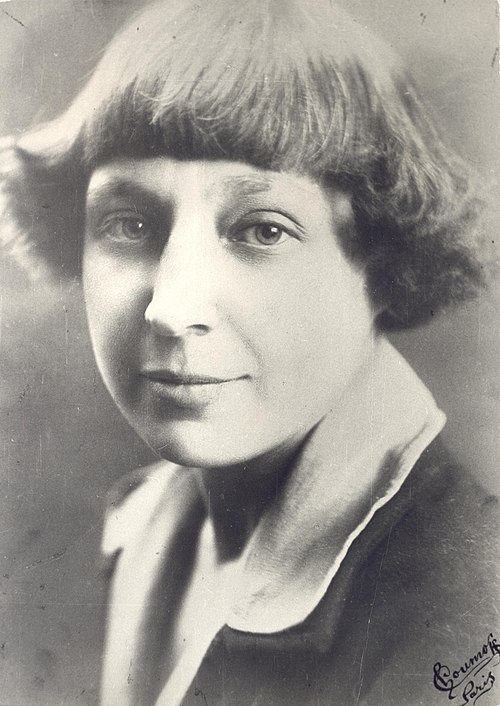
Marina TSVETAEVA
▪ ▪ ▪ ▪ ▪ ▪ ▪
Марина Ивановна ЦВЕТАЕВА
Marina TSVETAEVA

Filmography (extracts)
Text of songs
2009 - Isaev (Исаев) from Sergey URSULIAK [serial, 800 mn]
2004 - Long Farewell (Долгое прощание) from Sergey URSULIAK [fiction, 106 mn]
1994 - St. Petersburg Secrets (Петербургские тайны) from Mark ORLOV , Leonid PCHELKIN , Vadim ZOBIN [fiction, serial]
1984 - A Cruel Romance (Жестокий романс) from Eldar RIAZANOV [fiction, 145 mn]
1981 - State Border. Film 3. Eastern Frontier (Государственная граница. Фильм 3. Восточный рубеж) from Boris STEPANOV [fiction, 145 mn]
1980 - Word for the Poor Hussar (О бедном гусаре замолвите слово) from Eldar RIAZANOV [fiction, 167 mn]
1980 - Where did the singing canary fly in? (К кому залетел певчий кенар) from Vadim ZOBIN [fiction, 92 mn]
1975 - Irony of Fate or Sauna Blues (Ирония судьбы или с легким паром) from Eldar RIAZANOV [fiction, 192 mn]
Character
2013 - Mirrors (Зеркала) from Marina MIGUNOVA [fiction, 130 mn]
2008 - 1972 — Marina Tsvetaeva. Historical Chronicles with Nikolai Svanidze (1972 год — Марина Цветаева. Исторические хроники с Николаем Сванидзе) from Aleksey PODGORNY [documentary, 44.1 mn]
2007 - Luna v zenite (Луна в зените) from Dmitry TOMASHPOLSKY [fiction, serial]
2006 - The Charm of Evil (Очарование зла) from Mikhail KOZAKOV [fiction, serial, 275 mn]
2002 - Marina Tsvetaeva. A Romance of Her Soul (Марина Цветаева. Роман ее души) from Tatyana MALOVA [documentary, 39 mn]
Poems
2018 - Chistopol. Moments in the life of this town (Чистополь. Из жизни малого города) from Galina DOLMATOVSKAYA [documentary, 62 mn]
1992 - Come to Trekhprudny Lane (В переулок сходи Трехпрудный) from Galina DOLMATOVSKAYA [documentary, 19.4 mn]
Sites : ru-Wikipedia, fr-Wikipedia, en-Wikipedia,
Biography
Born on October 8, 1892, in Moscow, Marina Tsvetaeva grew up in a cultivated and demanding environment. Her father, Ivan Tsvetaev, was a renowned art historian and founder of the Museum of Fine Arts in Moscow (now the Pushkin Museum), while her mother was a talented pianist. From childhood, Tsvetaeva was immersed in a world where music, literature, and foreign languages occupied a central place. This early education profoundly shaped her writing, characterized by a distinctive musicality and great formal freedom.
She published her first collection, Evening Album, in 1910, at only eighteen years old. Very quickly, she established herself as an original voice in Russian poetry, alongside figures such as Anna Akhmatova and Boris Pasternak. But unlike these contemporaries, Tsvetaeva refused to align herself permanently with any specific literary movement: her poetry escapes schools, blending passionate lyricism, rhythmic breaks, and an almost burning emotional intensity.
The Russian Revolution of 1917 profoundly disrupted her life. Her husband, Sergei Efron, joined the White Army, opposed to the Bolsheviks. Remaining in Moscow under conditions of extreme poverty, Tsvetaeva endured tragic years, marked in particular by the death of one of her daughters, Irina, in 1920 in an orphanage. This dark period deeply nourished a body of work shaped by suffering, loss, and an intense spiritual quest.
In 1922, she left Russia and began a long exile that took her to Berlin, Prague, and then Paris. Despite recognition from certain émigré literary circles, she lived in great material hardship and increasing isolation. Her writing, ever more dense and daring, struggled to find a wide audience. She nevertheless maintained a famous correspondence with Boris Pasternak and Rainer Maria Rilke, reflecting the depth of her poetic and existential reflections.
In 1939, in a tense political context, Tsvetaeva decided to return to the Soviet Union, hoping to regain a place in her homeland. This return proved tragic. Her husband was arrested and later executed, her daughter Ariadna imprisoned, and she herself became marginalized, without resources or support. Isolated and overwhelmed by hardship, she was evacuated during the Second World War to the town of Yelabuga, in Tatarstan.
It was there that she took her own life on August 31, 1941.
Today, Marina Tsvetaeva is recognized as one of the greatest Russian poets of the twentieth century. Her work, long marginalized in the Soviet Union, is now celebrated for its expressive power, formal modernity, and uncompromising exploration of human passions. A poet of the absolute, she transformed the fractures of her life into a poetic language of rare intensity, where love, exile, memory, and revolt intertwine.
Marina Tsvetaeva did not write for cinema and was not involved in film production during her lifetime. However, from the second half of the twentieth century onward—and even more so after the Thaw period and the fall of the Soviet Union—her poems were rediscovered and incorporated into several films. In addition, a number of documentaries have been devoted to her, either partially or entirely.
Commentaries
- От Пушкина до Высоцкого: Великие русские поэты в исполнении наших звезд [De Pouchkine à Vysotski : Grands poètes russes interprétés par nos stars]
Инесе ПОНЕЛИС, 2024, kinoreporter.ru
Photos, videos, texts