Aleksey PODGORNY
Алексей ПОДГОРНЫЙ
Alekseï PODGORNY
Russia, 2010, 43.34mn 
documentary
1984 god — Yuriy Lyubimov. Istoricheskiye khroniki s Nikolayem Svanidze
▪ ▪ ▪ ▪ ▪ ▪ ▪

1984 год — Юрий Любимов. Исторические хроники с Николаем Сванидзе


 1984 — Yuri Lyubimov. Historical Chronicles with Nikolai Svanidze

 1984 — Youri Lioubimov. Chroniques historiques avec Nikolaï Svanidze

 
Directed by : Aleksey PODGORNY (Алексей ПОДГОРНЫЙ)
Writing credits : Marina ZHUKOVA (Марина ЖУКОВА)
Cinematography : Aleksey PODGORNY (Алексей ПОДГОРНЫЙ), Viktor STUPIN (Виктор СТУПИН)
Produced by : Nikolay BILYK (Николай БИЛЫК)
Narrator : Nikolay SVANIDZE (Николай СВАНИДЗЕ)
Character(s) : Leonid BREZHNEV (Леонид БРЕЖНЕВ), Mikhail GORBACHEV (Михаил ГОРБАЧЁВ ), Yuri LIUBIMOV (Юрий ЛЮБИМОВ), Iosif STALIN (Иосиф СТАЛИН)
Companies : "Наш Взгляд" ("Nash Vzglyad"), Телеканал "Россия " (TV channel "Rossiya")
 

Plot synopsis
Yuri Petrovich Lyubimov (1917-2014) was a world-renowned Russian actor and theater director.

In 1939, Lyubimov graduated from the Boris Shchukin State Institute of Dramatic Arts. During the 1930s, he met the renowned avant-garde director Vsevolod Meyerhold, formed friendships with Dmitri Shostakovich, and many other artists and intellectuals of his time. After serving in the Soviet army during World War II, Lyubimov joined the Vakhtangov Theatre, founded by Yevgeny Vakhtangov. In 1952, he received the Stalin Prize.

Lyubimov began teaching in 1963 and founded the Taganka Theatre the following year. Under Lyubimov's direction, the theatre became very popular in Moscow, and its company included actors Vladimir Vysotsky and Alla Demidova. In 1971, William Shakespeare's *Hamlet* became one of the theatre's flagship productions. Long a Soviet underground classic, Mikhail Bulgakov's novel The Master and Margarita was staged in 1977 in an adaptation by Lyubimov. In the 1980s, after Vysotsky's death, tensions surrounding the theater intensified. The authorities considered outright banning the performance Vladimir Vysotsky, dedicated to the artist's memory, but a personal meeting between Lyubimov and the General Secretary of the CPSU Central Committee, Yuri Andropov, saved it. However, a double cordon of militia surrounded the theater; access was granted only by written invitation. In 1982, Lyubimov's troupe was preparing Boris Godunov. The public dress rehearsal was met with widespread enthusiasm, but then the performance was banned, and no effort by Lyubimov could persuade the authorities to reverse their decision.

Lyubimov then went to work in Milan and later in London in 1983, where he was awarded the Evening Standard Prize. He was the first foreigner to receive this prize. In London, Lyubimov made several statements to journalists from The Times in which he severely criticized official Soviet cultural policy, particularly regarding theater. These statements provoked the anger of officials at the Soviet embassy in London and even led to threats.

Lyubimov refused requests from the Soviet authorities to return to Moscow and first directed Wagner's opera Tristan und Isolde in Bologna, then went to Milan for medical treatment. He subsequently resumed his work in Italy and England.
In January 1984, Lyubimov was working in Stuttgart, preparing a production in England, and negotiating a production of Rigoletto. In February 1984, Andropov, his patron, died. In March 1984, he was dismissed from his position for unjustified "absence" from work and replaced by Anatoly Efros as artistic director of the Taganka Theatre.

In May 1988, in the context of perestroika, Lyubimov returned to Moscow. He regained his citizenship and the directorship of the Taganka Theatre after five years of exile in May 1989.
In 1992, Lyubimov was awarded the title of People's Artist of the Russian Federation.
 

Selected in the following festivals or events :
- Historical Chronicles with Nikolay Svanidze, (kinoglaz.fr), 2026

Images


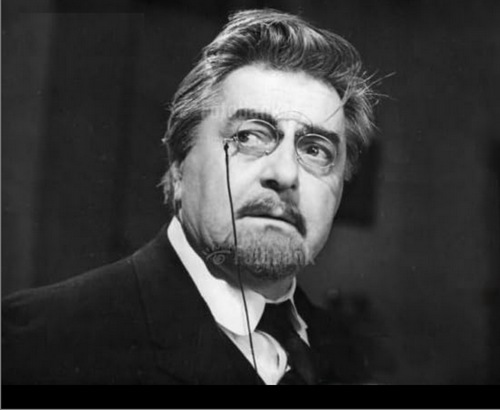
Youri LIOUBIMOV (Юрий Петрович ЛЮБИМОВ) 1917-2014