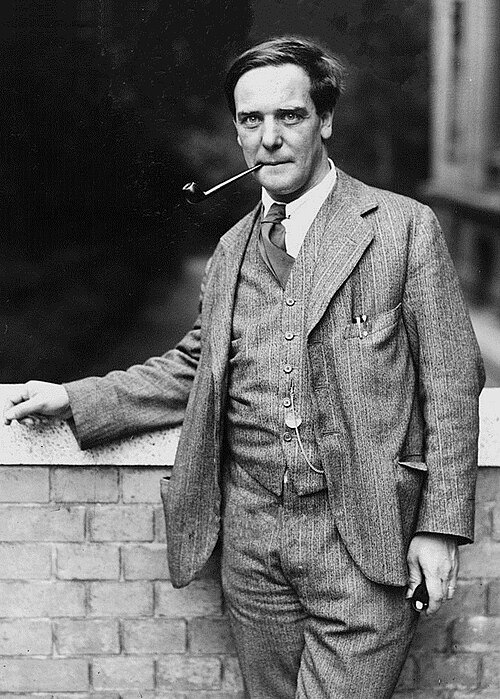
Pyotr Leonidovich Kapitsa (1894–1984) was an outstanding Soviet physicist and the 1978 Nobel Prize laureate in Physics. He made major contributions to the development of low-temperature physics and the study of magnetic phenomena.
Early Life and Education
Pyotr Kapitsa was born on July 8, 1894, in Kronstadt, into the family of mechanical engineer Leonid Petrovich Kapitsa and his wife Olga Iosifovna. In 1912, he entered the Petrograd Polytechnic Institute, where he studied electrical engineering. Kapitsa graduated with distinction in 1918 and began working at the Physical-Technical Institute in Petrograd.
Scientific Career
In 1921, Kapitsa was sent to the University of Cambridge, where he worked under Ernest Rutherford. In Cambridge, he conducted a series of important studies in low-temperature physics and magnetic phenomena. In 1924, Kapitsa was appointed head of the Mond Laboratory in Cambridge, where he continued his research.
Return to the USSR
In 1934, Kapitsa returned to the USSR and founded the Institute for Physical Problems in Moscow. There he continued his work in low-temperature physics and magnetism. In 1939, Kapitsa was arrested on charges of espionage and spent several years in detention. After his release, he was allowed to resume his scientific work, though under certain restrictions.
Scientific Achievements
Kapitsa made a significant impact on the development of low-temperature physics. He developed a method for producing liquid hydrogen and helium, enabling experiments at extremely low temperatures. He also studied superconductivity and magnetic phenomena, leading to the discovery of new physical effects.
Nobel Prize
In 1978, Pyotr Kapitsa was awarded the Nobel Prize in Physics for his pioneering research in low-temperature physics. This was the first Nobel Prize awarded to a Soviet scientist after a long hiatus.
Personal Life and Legacy
Kapitsa was married to Anna Alekseevna Krylova, with whom he had three children. He died on April 8, 1984, in Moscow. His scientific work and discoveries continue to influence the development of physics and related fields.
Kapitsa remains one of the most distinguished figures in the history of science, whose accomplishments and contributions to physics will be remembered and studied for generations to come.