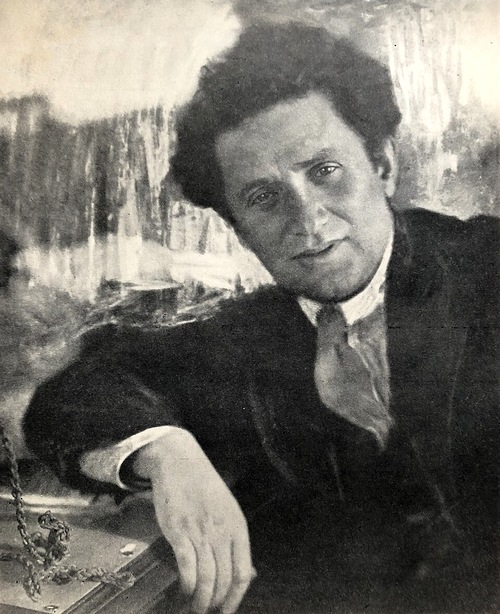
Early Years
Grigory Zinoviev, born on September 11 (23), 1883 in Elisavetgrad (now Kropyvnytskyi, Ukraine), came from a Jewish family. His father owned a small shop, which provided the family with relative prosperity. Zinoviev received home schooling and later attended a gymnasium. From an early age, he showed an interest in politics and revolutionary ideas, which led him to participate in the socialist movement.
Education and Revolutionary Activity
In 1901, Zinoviev joined the RSDLP and became an active participant in revolutionary activities. He was arrested for taking part in student protests and spent some time in prison. After his release, he emigrated to Europe, where he continued his political work. In 1903, he became one of Lenin’s supporters and actively engaged in the Bolshevik movement, working for several party newspapers.
Return to Russia and the October Revolution
After the February Revolution of 1917, Zinoviev returned to Russia and became one of the leading Bolsheviks. He took an active part in preparing for the October Revolution and was one of the organizers of the Bolshevik seizure of power in Petrograd. At the meeting of the Central Committee of the RSDLP(b) on October 10 (23), 1917, he and Lev Kamenev voted against the decision to launch an armed uprising, which caused disagreements with Lenin, but they ultimately supported the revolution.
Post-Revolutionary Years
After the revolution, Zinoviev held high-ranking positions, including Chairman of the Petrograd Soviet. He supported the policy of “Red Terror” and actively participated in the struggle against counterrevolution. In 1920, he became one of the founders of the Comintern and led its activities, striving to spread revolutionary ideas beyond Russia.
Conflicts and the Struggle for Power
After Lenin’s death in 1924, Zinoviev became one of the contenders for leadership in the party, but soon found himself in conflict with Stalin and other leaders. In 1927, he was expelled from the party for participating in the United Opposition, which opposed Stalin’s policies. Zinoviev was later reinstated in the party, but his influence continued to decline.
Arrest and the Moscow Trials
In 1936, Zinoviev was arrested and became one of the defendants in the first Moscow Trial, where he was accused of plotting against the Soviet government. He admitted guilt under pressure from investigators, though his testimony was contradictory. On August 25, 1936, Grigory Zinoviev was executed.
Legacy
Zinoviev remains an important figure in the history of Soviet Russia. His life and activities reflect the complex internal conflicts within the party and the struggle for power in the early years of Soviet rule. He was among the first to recognize the dangers of Stalinism, and his fate serves as a reminder of the tragic consequences of political repression. In 1988, he was posthumously rehabilitated, and his contribution to the history of the Bolshevik movement was reassessed.