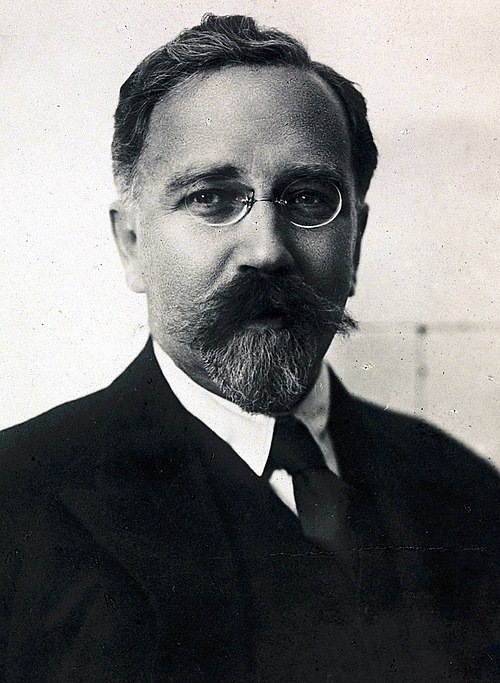
Early Years
Lev Borisovich Kamenev, born on July 6 (18), 1883, in Moscow, was the son of a railway engineer. His family was of Jewish origin, and during his childhood he encountered antisemitism, which influenced his political views. He studied at the 2nd Tiflis Gymnasium and later entered the law faculty of Moscow University. While at the university, Kamenev became actively involved in the revolutionary movement, which led to his arrest in 1901 for participating in student protests.
Political Activity
Kamenev became a member of the RSDLP in 1901 and soon joined the Bolshevik faction. He actively took part in revolutionary activities, working as a propagandist and agitator. In 1905, he was arrested and exiled to Siberia, but soon returned to revolutionary work. In 1914, he became one of the editors of the newspaper Pravda, where he advocated ending the war and supporting the working class.
The October Revolution
In 1917, Kamenev was one of the key leaders of the Bolsheviks. He served as chairman of the Second All-Russian Congress of Soviets, at which Soviet power was proclaimed. However, his position regarding the October Revolution was ambiguous. He and Grigory Zinoviev opposed an immediate armed uprising, which led to conflict with Lenin. Nonetheless, after the successful seizure of power by the Bolsheviks, Kamenev assumed important posts in the new government.
Post-Revolution Years
After the revolution, Kamenev continued to hold high-ranking positions, including chairman of the Moscow Soviet and deputy chairman of the Council of People's Commissars. He was one of Lenin’s oldest associates and took an active part in shaping the first Soviet institutions. Kamenev also worked on issues of foreign policy and on the country’s economic reconstruction after the Civil War.
Conflict with Stalin
In 1925, Kamenev and Zinoviev began openly criticizing Stalin’s policies, which led to their removal from the Central Committee and from the party. They became part of the United Opposition, opposing Stalin’s methods of governance and his doctrine of “socialism in one country.” In 1935, Kamenev was arrested and became one of the defendants in the first Moscow Trial, where he was accused of plotting against the Soviet government.
Death
On August 25, 1936, Lev Kamenev was executed by firing squad. His execution was part of Stalin’s political purges aimed at eliminating political opponents. In 1988, he was posthumously rehabilitated, and his role in the history of the Bolshevik movement was re-evaluated.
Legacy
Kamenev remains an important figure in the history of Soviet Russia. His life and activity reflect the complex internal conflicts within the party, the struggle for power, and the ideological
disagreements among the Bolsheviks. He was one of the first to recognize the dangers of Stalinism, and his fate serves as a reminder of the tragic consequences of political repression.